
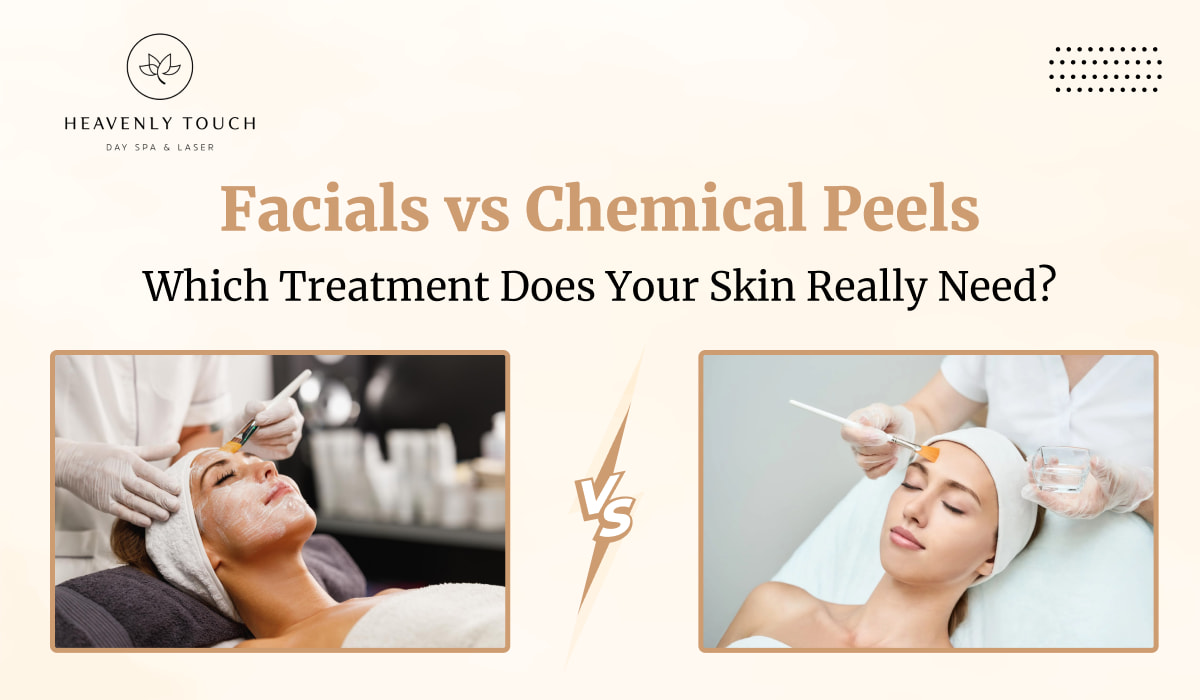
Facials vs Chemical Peels: Which Treatment Does Your Skin Really Need?
There are times when you look in the mirror long enough and you’ll spot the dullness, the fine lines, the uneven patches, or those stubborn breakouts that just won’t clear. These little reminders are exactly why so many of us turn to skin treatments in the first place.
But there are a lot of treatment options, and we are confused about how to choose the right one.
85% of people between the ages of 12 and 24 experience acne at some point, and by the time we hit our 30s and 40s, signs of aging like wrinkles, pigmentation, and loss of elasticity start to creep in.
Well, in this blog, we’ll be discussing the top two skincare treatment methods: chemical peel vs facial treatment. Facials remain the go-to reset for many, hydrating, cleansing, and soothing stressed skin. But when deeper issues like sun spots, acne scars, or fine lines take center stage, chemical peels often become the treatment of choice.
What is a Chemical Peel?
A chemical peel is a cosmetic skin treatment used to improve the appearance and texture of the skin by removing the damaged outer layers. During the procedure, a chemical solution is applied to the skin, which causes controlled exfoliation. Over the next few days, the old skin cells shed, and new, healthier skin replaces them.
Chemical peels are commonly used for:
- Acne scars
- Fine lines and wrinkles
- Uneven skin tone or pigmentation
- Sun damage
- Rough or dull skin texture
Depending on your needs, peels come in different strengths:
- Light peels work on the surface to refresh dull or tired-looking skin.
- Medium peels reach deeper layers to reduce wrinkles, pigmentation, and acne scars.
- Deep peels go further into the skin to address advanced damage, usually performed by a dermatologist.
Chemical peels are considered one of the most effective skin rejuvenation methods, especially for people who want more noticeable results than what a facial treatment can provide.
What is a Facial?
A facial treatment is a non-invasive skincare procedure designed to cleanse, hydrate, and refresh the skin. Most facials include steps like deep cleansing, exfoliation, steam, extractions (to clear clogged pores), a nourishing mask, and massage to improve the skin’s surface and overall health with immediate, visible results.
These treatments leave the skin looking brighter, hydrated, and more relaxed, making them a popular choice for routine care.
Facials are commonly used for:
- Dryness and dehydration
- Mild breakouts or clogged pores
- Dull or uneven complexion
- General maintenance for healthy skin
While facials don’t provide the same long-term results as chemical peels, they are considered one of the safest skin treatments for regular upkeep, relaxation, and maintaining a healthy glow.
Know the different types of facials here: Top Summer Facial Treatments to Keep Your Skin Fresh & Glowing
Chemical Peel vs Facial Treatment: Key Differences
|
Aspect |
Facial Treatment |
Chemical Peel |
|
Purpose |
Focuses on relaxation, hydration, cleansing, and improving the skin’s surface glow. |
Targets deeper concerns like acne scars, pigmentation, fine lines, and sun damage by exfoliating skin layers. |
|
Depth of Treatment |
Works on the outermost layer of skin (epidermis). |
Penetrates deeper, light, medium, or deep depending on peel type, for more dramatic results. |
|
Best For |
Dryness, mild breakouts, clogged pores, or dull complexion. |
Acne scars, wrinkles, uneven tone, rough texture, and significant sun damage. |
| Results | Immediate glow, smoother texture, and relaxation benefits. |
Long-term skin rejuvenation with improved tone, texture, and reduction of aging signs. |
| Recovery Time |
Minimal to none; skin may feel fresh instantly. |
May involve redness, peeling, or downtime depending on peel strength. |
|
Frequency |
Can be done monthly as part of regular skincare. |
Typically done every few months, depending on skin type and goals. |
|
Cost |
Generally more affordable, offered in spas and salons. |
More expensive, often performed by a dermatologist or in medical spa settings. |
| Safety | Considered a safe skin treatment with minimal risk. |
Safe when performed by professionals, but may cause temporary side effects (redness, flaking, sensitivity). |
| Examples | Classic spa facials, hydrating facials, microdermabrasion vs facial treatments. |
Light glycolic peel, TCA peel, or deep phenol peel. |
Benefits of Chemical Peels
- Skin texture improvement treatments – Chemical peels remove the outer damaged layer of skin, making it smoother, softer, and more even compared to a facial treatment.
- Effective for acne scars and dark spots – If you’re wondering facial vs chemical peel for acne scars or a chemical peel or facial for dark spots, peels are usually the better option since they penetrate deeper.
- Hyperpigmentation and uneven tone – For those asking which is better facial or a chemical peel for hyperpigmentation, peels are more effective in fading sun damage, melasma, and pigmentation issues.
- Anti-aging skincare option – A chemical peel boosts collagen and helps reduce fine lines and wrinkles, making it more powerful than a standard spa facial for anti-aging.
- Clearer pores and fewer breakouts – Compared to microdermabrasion vs chemical peel vs facial, peels unclog pores more thoroughly, preventing blackheads and acne flare-ups.
- Brighter, glowing skin – Peels give a radiant look that lasts longer than the glow from a facial.
- Customizable intensity – From mild peels with little downtime to deeper dermatologist peels, you can choose the level based on your goals.
- Pre-event skin prep – Many brides and grooms also ask about the best treatment: facial or chemical peel, before a wedding. A light peel can give you lasting radiance for the big day.
Benefits of Facials
Facials are one of the most popular non-invasive skin treatments that keep your skin refreshed, hydrated, and glowing. Here are some of the key benefits of facials:
- Deep Cleansing and Detoxification – A facial treatment helps remove dirt, oil, and impurities that regular cleansing cannot. This makes facials a safe and effective way to maintain clear and healthy skin.
- Hydration and Moisture Balance – Facials nourish the skin by restoring hydration, making them an ideal choice for people with dry, sensitive, or dehydrated skin.
- Improved Blood Circulation – The massage techniques used in spa facials promote better circulation, which enhances natural radiance and improves overall skin texture.
- Relaxation and Stress Relief – Beyond the visible results, facials are also known for their calming effect, making them a holistic skincare treatment for both mind and body.
- Suitable for Sensitive Skin – Compared to chemical peels, facials are a safer option for those with sensitive or reactive skin since they focus on gentle exfoliation and nourishment.
- Pre-Event Glow – For occasions like weddings or special events, many people prefer facials over chemical peels because of minimal recovery time and instant glow.
- Anti-Aging Skincare Option – Regular facials can reduce the appearance of fine lines and keep the skin plump, offering a softer approach compared to stronger treatments like microdermabrasion vs chemical peel, vs facial procedures.
Final Thoughts
By now, you probably have a clearer picture of the difference between a facial and a chemical peel. Facials are the go-to when you want hydration, relaxation, and an instant glow. Chemical peels, on the other hand, step in when you need deeper correction, whether it’s softening acne scars, smoothing wrinkles, or evening out stubborn pigmentation.
The real question isn’t just which is better? But which is better for me right now?
That’s where professional guidance matters. At Heavenly Touch Day Spa & Laser in Surrey, BC, we don’t believe in one-size-fits-all skincare. With over 30 years of experience, we’ve helped clients choose the right path and help with the treatment solutions as well.
To know more about us and how we can help you, book a consultation call with our team today.
Frequently Asked Questions(FAQs)
Is a facial or chemical peel better for acne scars?
Chemical peels work better for acne scars because they exfoliate deeper layers of skin, while facials mainly refresh the surface.
Do facials or chemical peels work better for wrinkles?
Chemical peels are more effective for fine lines and wrinkles, as they stimulate collagen and resurface the skin.
Can a chemical peel replace regular facials?
Not exactly, chemical peels offer deeper skin rejuvenation, but regular facials help maintain hydration and overall skin health between peels.
Are facials or chemical peels better for glowing skin?
Facials give instant radiance, while chemical peels provide longer-lasting brightness by improving tone and texture over time.
Which treatment lasts longer: chemical peel or facial?
A chemical peel lasts longer, with results that can be seen for weeks or months, while facial results usually last a few days to a week.